
ClevverBlog

30th Oct 2025
Is your Delaware C‑Corp a decision or just a habit?
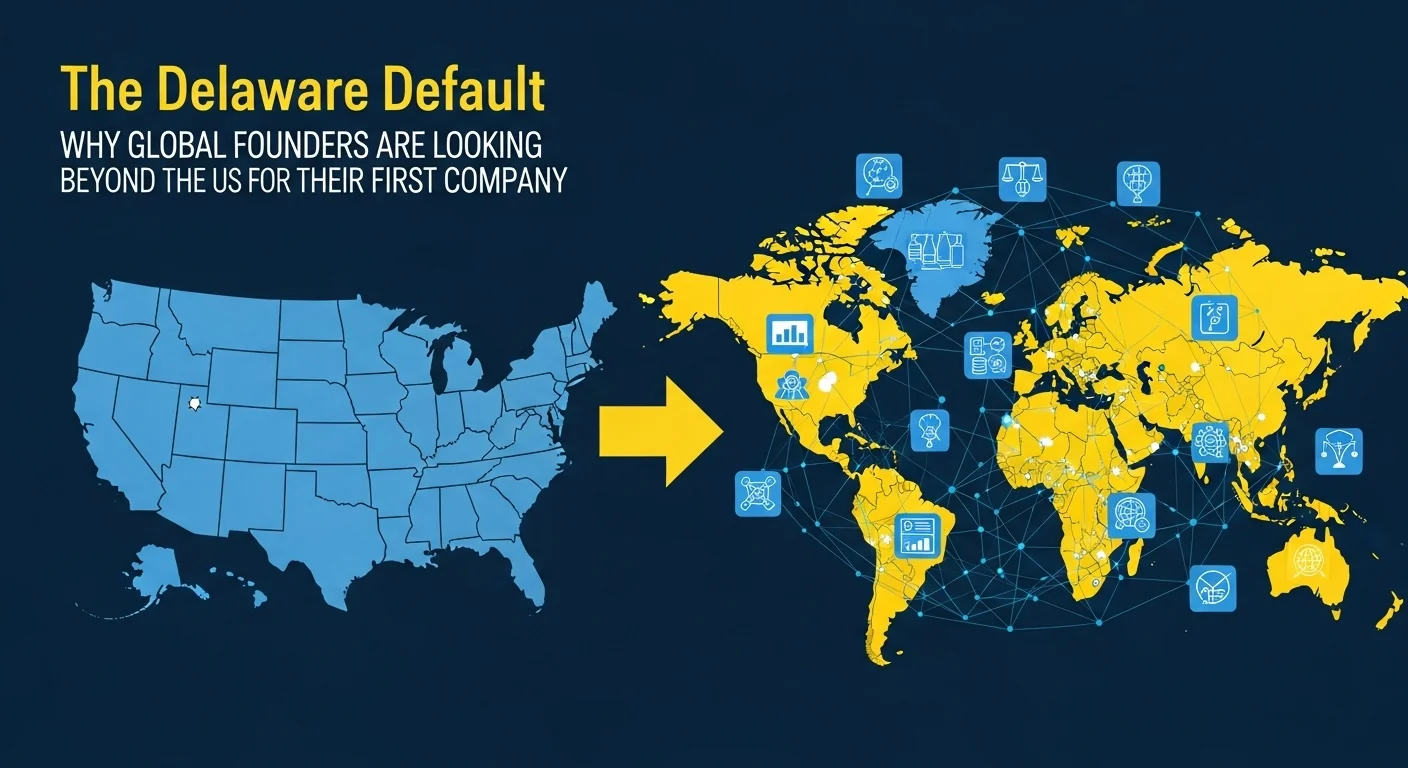
For decades, entrepreneurs worldwide have been guided by an unspoken rule: if you’re truly serious about scaling a high‑growth venture‑backed venture, the default move is to set up shop in Delaware. The so‑called "Delaware Default" has morphed into a kind of rite of passage—a signal to investors that you know the game and are ready to play.
The route is well‑trod, the legal scaffolding is sturdy, and the precedent swamps any doubt. Yet, in an age of remote‑first teams, dispersed talent, and markets without borders, that default warrants a fresh critical look.
For a founder with a worldwide vision, automatically opting for a US entity without weighing the alternatives can turn into a strategic misstep. The world isn’t what it used to be, and your incorporation strategy shouldn’t be either. Instead of wondering "Should I form a Delaware C‑Corp?", the pressing query now is, "Where on the planet does the ideal launchpad for my specific business sit?"
The Delaware Default: A Powerful Habit, Is It Your Best Strategy?
Make no mistake: setting up a corporation in the United States—Delaware in particular—stands as a powerful option for many. Grabbing hold of the planet’s venture‑capital pool, the reassuring constancy of a stable corporate‑law framework, and the sheer brand weight of a .com moniker are advantages that speak for themselves. If your primary target market, investor base, and key team members are in the US, the choice still reads like a top‑tier option.
However, the comforting myth of a one-size-fits-all playbook starts to fray once it meets the reality of a modern, globally‑oriented startup. Today's founders are stitching together companies that draw on engineers in Eastern Europe, marketing teams in Southeast Asia, and customers scattered across every continent from day one.
Trying to jam this global organism into a purely US-centric legal and financial framework only spawns unnecessary friction. It can complicate banking, trigger tax inefficiencies, and distance your headquarters from your core market or operational hub. The Delaware default was built for a world where capital and talent were geographically concentrated. That world no longer exists.
The Founder’s Chessboard: Choosing Your Jurisdiction Like a Grandmaster
The founders these days aren’t just rolling out a product; they’re drafting the blueprint of a truly global enterprise. That translates into a kind of "arbitrage"—not as a way to dodge rules, but as a calculated move to land in the legal and regulatory climate that gives their specific business model the biggest edge.
Every business model flourishes in its unique ecosystem, and the notion that one single location can be the universal "best" is an outdated relic. Consider these alternatives:
- For the FinTech Innovator: A US LLC may seem the norm. If your focus is on open banking or digital payments in Europe, planting your corporate base in the United Kingdom or Lithuania could unlock forward‑leaning regulatory sandboxes and grant you "passporting" rights, letting you operate smoothly across the entire European Union. Your proximity to the London FinTech ecosystem—or to the EU’s bodies—acts as a robust competitive moat.
- For the E‑commerce and Logistics Powerhouse: If your supply chain is anchored in Asia and your primary growth market lies in the APAC region, why let your legal home sit on the other side of the world? Planting the company in Singapore opens a gateway to Southeast Asia, world‑class logistics infrastructure, and a tapestry of favourable trade and tax treaties. It brings your structure into line with the way you actually operate.
- For the B2B SaaS Scale‑up: Landing European enterprise clients usually demands a region‑wide commitment, especially when GDPR‑driven data‑privacy rules are in play. Setting up an entity in Ireland not only lands you a favorable corporate tax rate but also hands you an English‑speaking foothold inside the EU. That sends a signal to prospects that you understand their regulatory terrain and are already compliant, which builds trust and speeds up the sales cycle.
For too long, early‑stage founders viewed these possibilities as out of reach—hidden beneath endless paperwork, steep legal fees, and the relentless drag of distance. Now, the story is turning. New‑generation platforms like ClevverCompany are tearing down those barriers, transforming a knotty strategic choice into a smooth digital workflow.
Beyond Formation: The Need for a Global Operating System
Choosing the jurisdiction is only the opening move. Running a global enterprise demands a management framework that’s equally worldwide. Holding a registration certificate in Singapore, for instance, buys you little if you can’t open a bank account, sort official mail, or stay on top of compliance filings while your base sits in Berlin or Buenos Aires.
That’s where the old‑school single‑jurisdiction incorporation model falls short. The modern founder isn’t after a UK-only provider; they need a partner who understands that global business is an intricate web of interlinked jurisdictions.
What we’re aiming for here is to fuse the levers of corporate oversight into one smooth, all‑in‑one platform:
- Global Reach: Select from more than 20 countries—not as isolated tick‑boxes, but as parts of a unified worldwide strategy.
- Fully Remote Process: From the moment you set up the entity and secure an address to handling everyday mail, everything lives on a single dashboard you can reach from anywhere.
- Integrated Compliance Management: The biggest risk for a company isn’t the market; it’s the tangled mess of cross‑border compliance. A global platform hands you the toolbox and the backing you need to hit every filing deadline and satisfy every regulatory obligation in each jurisdiction you operate, cutting risk and freeing you to chase growth.
Your First Move Matters: From Default to Design
The successful founders are purposeful. They don’t slip into default mode; they make strategic choices. Choosing your incorporation jurisdiction is one of the pivotal strategic decisions you’ll ever make. It forms the bedrock of your company’s ability to raise capital, attract talent, reach markets, and operate smoothly on a global scale.
Don’t let an old‑fashioned habit dictate your company’s future. Rather than reflexively defaulting to Delaware, pause and consider the path that truly fits your business. Where are your customers? Where is your team? What regulatory landscape will speed up your growth instead of holding it back?
Think of the world as your launchpad. The savvy choice isn’t to trail the crowd, but to land on terrain that gives you the most solid footing for success.
Explore your global incorporation options with ClevverCompany. Build a truly international business from day one.