
ClevverBlog

26th Dec 2025
Introduction
What if the company you shut down last year was not really dead?
You stopped the company’s operations, cleared the bank account, and moved on to your next big idea. To you, the company feels like a closed chapter.
The law and the IRS, however, may view the company in another way.
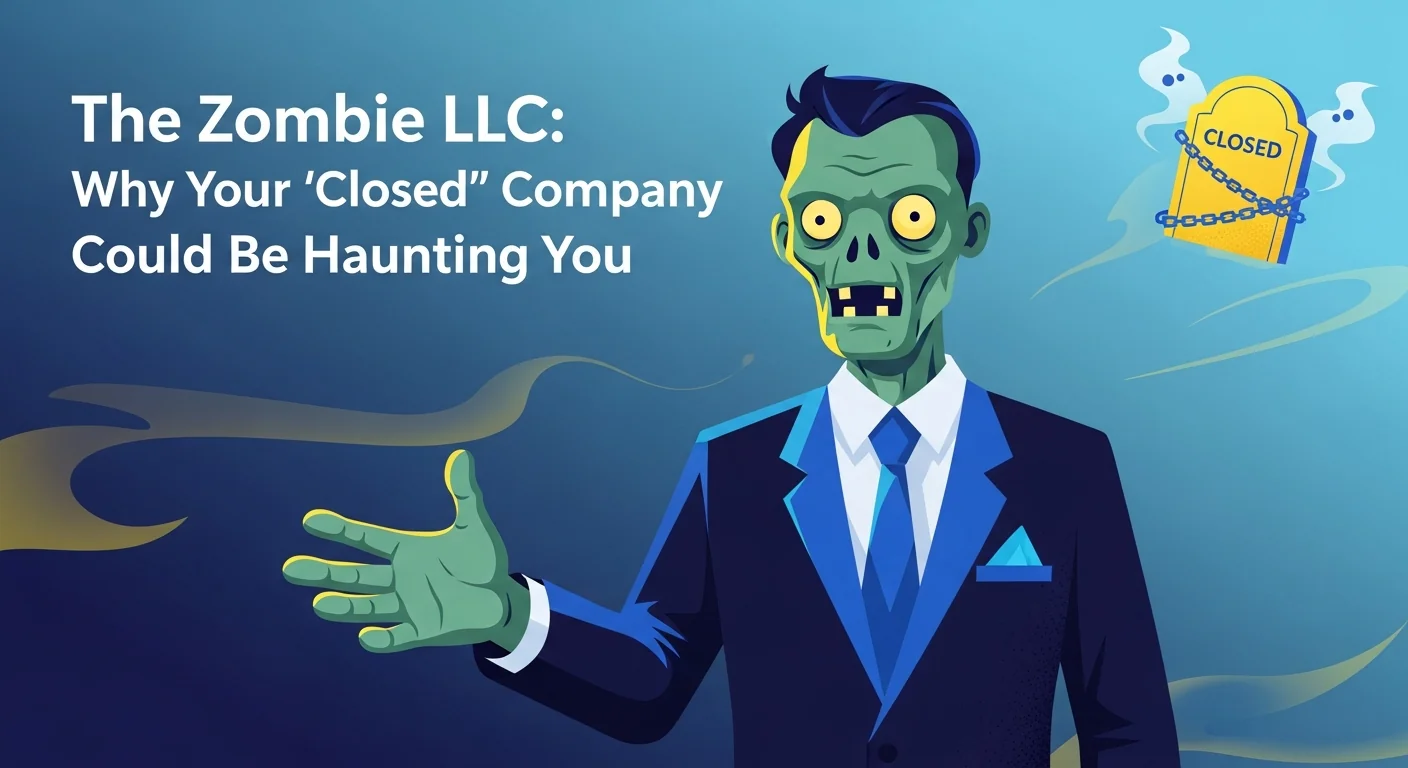
I have seen this happen to countless business owners. I call it a "Zombie Company"—a business that stopped working but never got shut down properly. I have seen the Zombie Company come back and haunt founders with costs that are high and unexpected.
What is a Zombie Company?
In the world of tech, founders understand the idea of "technical debt." Technical debt is the hidden cost of redoing work because founders chose a quick fix instead of a better solution that would take longer.
A Zombie Company is the financial version of compliance debt.
A Zombie Company is a registered business entity (such as an LLC or a C‑Corp) that does not generate revenue and does not conduct business but has not been officially closed with the state.
I have seen many founders fall into this trap. Many think that if a company has a zero balance and no activity, it simply disappears. That idea is wrong. The Secretary of State and the IRS still see the company as existing.
The Zombie Company is a registered entity with ongoing legal obligations. It will keep moving and adding liabilities until you take official action.
The Haunting: Why a Zombie Company is a Founder’s Worst Nightmare
Leaving the Zombie Company to wander in the wilderness is not just messy—it is a direct threat to your financial health and your future businesses. The consequences can be severe and long lasting:
- Accumulating State Fees and Penalties: Every state requires an annual report and a franchise tax to keep a company in good standing. When a company stops filing, the state does not forget. The state begins assessing fees and penalties that add up over time. A missed annual fee can quickly become thousands of dollars of debt owed. I have seen a small missed fee turn into a massive bill. The cost grows fast.
- Risk of Personal Liability: The primary benefit of an LLC or C-Corp is the corporate veil, which separates personal assets from business debts. If you do not keep your company current—including filing a dissolution—creditors can argue that the veil should be pierced. If the veil is pierced, you become personally liable for any lingering company debts or fees. That personal liability can put your savings and personal property at risk.
- A Black Mark on Your Record: The state maintains records. A company that is involuntarily dissolved or that is in bad standing because of non‑payment or non‑filing shows up as a red flag. This can hurt your credit score and also cause major roadblocks later.
- Complications When Starting Your Next Venture: Imagine you are ready to launch your next startup. You go to register a company in the same state, and the state blocks you because your name is still tied to an entity in bad standing. You will have to go and clean up the old mess—paying all the back taxes and penalties—before you can move forward. That will kill your momentum.
The Clean Kill: How to Properly Dissolve Your Business
Slaying a Zombie Company requires more than locking the door and turning off the lights. It demands a formal, multi-step process to ensure the end is clean and final.
The required steps include:
- Filing the Articles of Dissolution with the state.
- Settling all known debts and liabilities.
- Filing a final tax return with the IRS to inform the government that the company is finished.
The process can be complex. It requires specific legal paperwork and tax knowledge that most founders do not have time for. The final step of the business journey—the filing of the tax return and the dissolution paperwork—must be done with care.
I have helped many founders navigate the filing and settling of debts. Smooth Exit helps founders handle these complexities so they can feel certain of a clean break. We do not just file a form; we manage the end‑to‑end shutdown process from start to finish.
Our service guarantees full compliance through:
- CPA services that prepare and submit your final federal tax return and handle all necessary year‑end filings.
- Real human support from an expert network that guides you through every step, ensuring nothing is missed.
- Flat pricing, giving you a clear end with no surprise fees that come back to haunt you.
Conclusion
How you end a business is as important as how you start a business.
A clean exit lets you focus entirely on your next venture without the legal and financial ghosts of the past.
Do not let your old company become a zombie that threatens your future. Take the necessary steps to give it a proper, final, and compliant ending. Ensure your final chapter is a clean one.
Get peace of mind with Smooth Exit.