
ClevverBlog

08th Dec 2025
I have seen the US company get formed. The website go live. The pitch deck get polished. I still ask: what is the way for the customers to connect with the US company?
For many founders, the answer is a simple phone number, placed on a contact page—a detail often added later. That is a mistake.
In today’s world of work, you might see a business phone number as just a contact. That view is like buying a server and then using the server only for a simple "hello world" page.
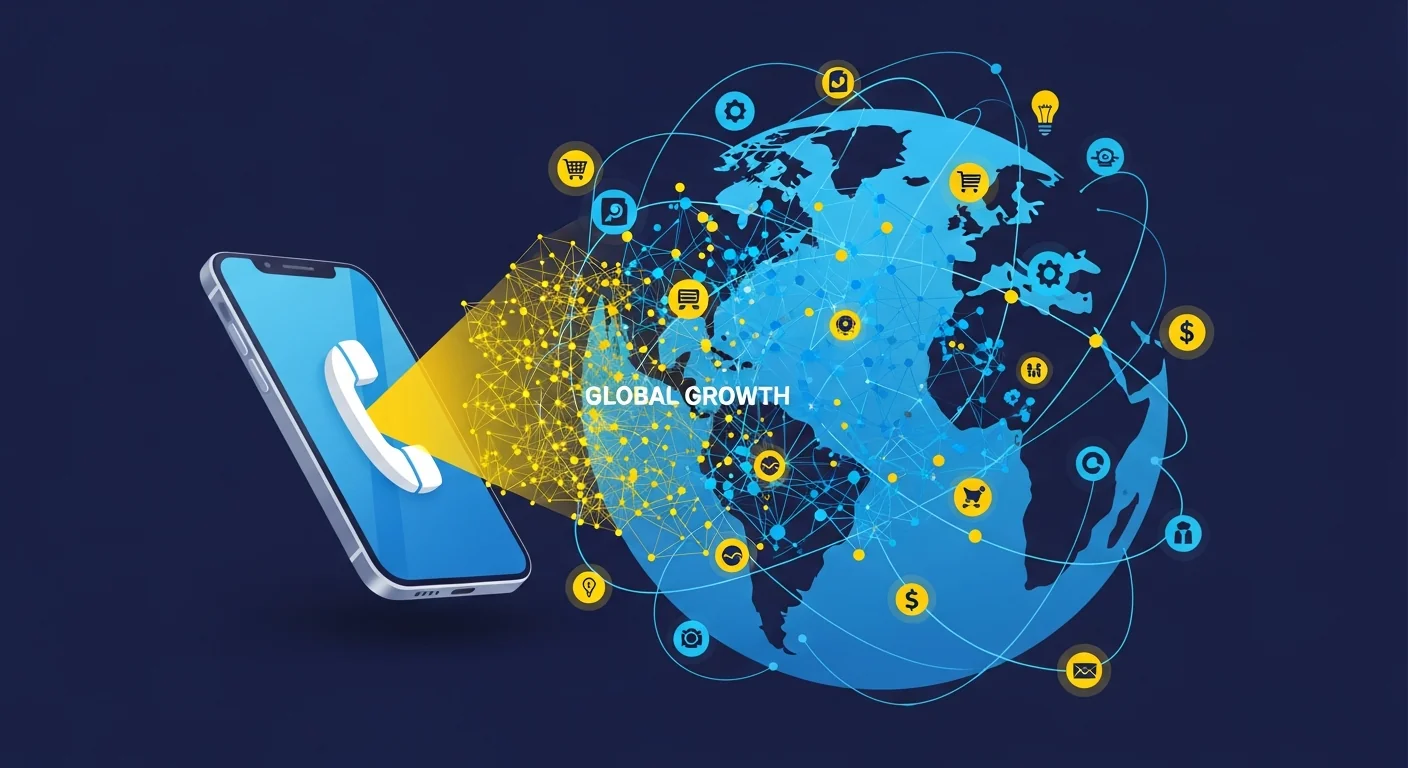
The real value does not come from having a business phone number. The real value comes from what you build with a business phone number. For an entrepreneur, a local phone number is not just a detail. It is the base of a system that lets customers talk to you from anywhere. I have seen many small businesses start with a phone number and then grow their reach globally.
From Credibility to Capability
Let us get the obvious out of the way: use a phone number to build trust.
When a potential customer in New York sees a (212) area code, even if the business is foreign, the local phone number instantly signals legitimacy. It removes a layer of friction. It tells the customer that the business is serious and accessible in the market. The local phone number is your entry ticket.
Stopping at the number, however, creates the credibility trap. The real power of a business number is not in how it looks, but in what it can do for the business.
The business number does not just make a company look local. It gives the company the tools to work locally, even when the company is far away. The real question is whether the business number lets the company run and grow efficiently.
Your Communication Operating System
I think of ClevverNumber not as a phone line, but as a hub that routes calls for my company. ClevverNumber separates the number the customer sees from the place the call goes.
This simple change gives a lot of flexibility for a team that works across various locations. Consider these scenarios for a global startup:
- The Global Sales Team: An important lead from Chicago calls your US number. The system automatically forwards the call to the head of sales, who works from a co‑working space in Lisbon. The customer gets a seamless experience, and the business never misses an opportunity.
- The Remote Support Agent: A support specialist in Manila needs to call a customer in Miami to fix an issue. The specialist uses the ClevverNumber app on their smartphone. The outbound call shows the local Miami business number. The customer sees a familiar number, which raises the answer rate and strengthens your local presence.
In both cases, the phone number is not a fixed point. It is a tool that routes communication to the right person at the right time, no matter where they are. This lets the decentralized team work as a single, local‑facing unit.
Growing Your Reach Without Extra Problems
The "hub" model is explicitly built for growth.
The biggest challenge for a growing startup is that operational complexity often grows faster than revenue. You go into a new market, and suddenly you are dealing with telecom contracts, new hardware, and fragmented communication systems.
This challenge highlights the benefit of a unified solution. A global phone number provider works as a platform for your entire international footprint.
Imagine a successful US launch. The startup then targets the UK and Singapore. Instead of starting from scratch, I simply add a London and a Singapore number to the existing operational hub.
The hub already has the established call-forwarding rules, team member access, and the app-based calling system. These processes are instantly copied across the new markets.
This system then works seamlessly with numbers in potentially 80 countries. The local numbers let you set up the market's communication infrastructure in minutes, not months. You avoid the headaches. The process is simple, giving you a global presence managed from a single, simple dashboard.
Install Your Communication OS
Your business phone number is one of the most direct ways a customer encounters your brand. I have seen how profoundly it can shape the initial conversation.
When you treat the business phone number as merely a static contact detail, you miss a massive opportunity. It is time to see the business phone number as a powerful tool—the core of your customer interactions.
By moving from a static contact detail to a dynamic communication system, you gain:
- Instant local credibility in every market you enter.
- Unmatched operational flexibility for your remote and global teams.
- A scalable framework for rapid and efficient international expansion.
Don't just get a number. Install your global communication OS with ClevverNumber today.