
ClevverBlog

03rd Feb 2026
You have done it. You navigated the paperwork. You chose a state. You officially formed your US company. The formation service gave you a free Registered Agent address.
The free Registered Agent address looks like a package. The free Registered Agent address feels like a base for your new business. I know the feeling of getting a free Registered Agent address.
But what if that base has a critical crack?
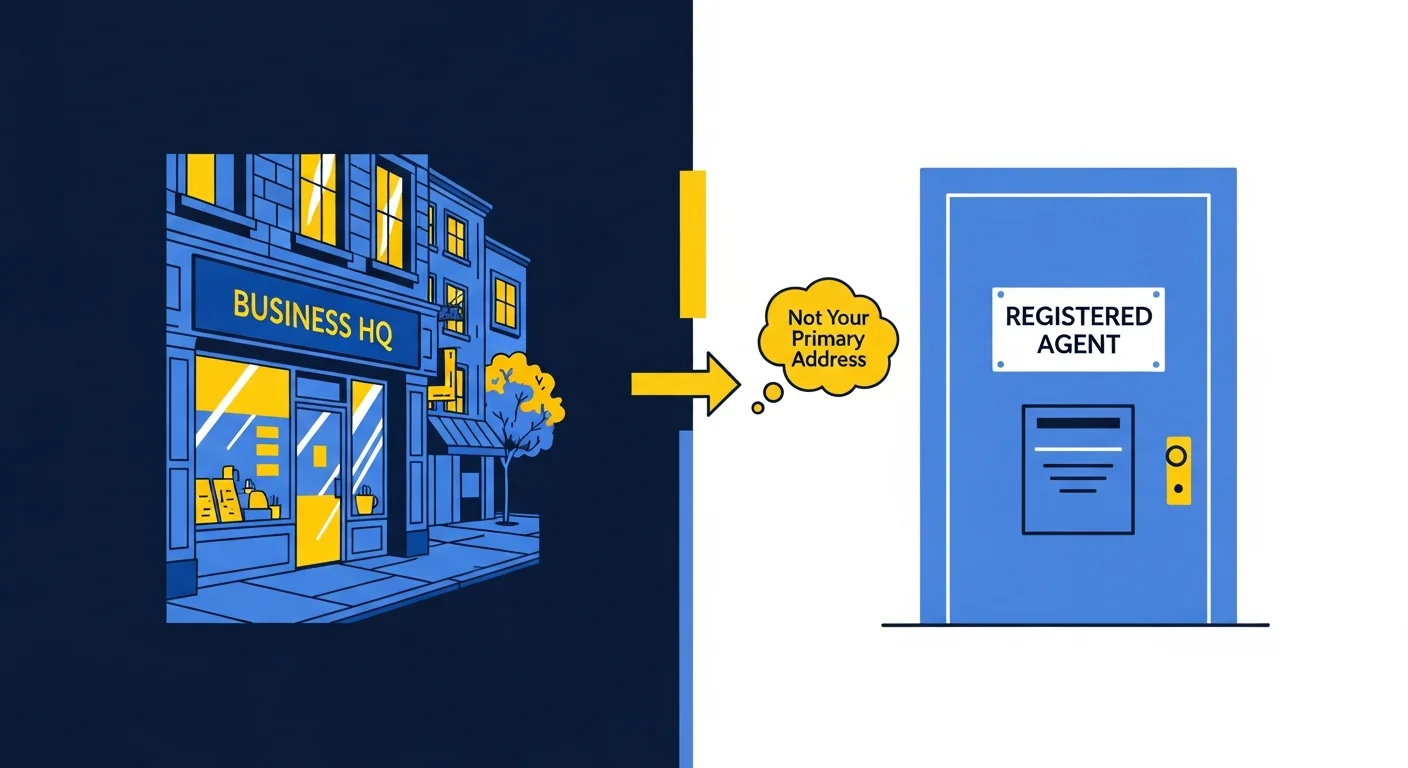
The "free" address costs you customers, blocks your bank account, and hurts your credibility. Many founders fall into the trap. Many founders think that a Registered Agent (RA) address works as the business address.
A Registered Agent address does not work as the business address. While the law requires an RA address, using it for everyday business tasks is a common and costly mistake for a new startup. I have seen many founders make this mistake. We break down why.
What is a Registered Agent Address, Really?
First, it is important to understand the purpose of a Registered Agent. I have learned that a Registered Agent is a chosen party. The law in the US requires the Registered Agent to receive legal and state mail for the business.
The Registered Agent handles service of process (lawsuit notices), franchise tax forms, and other official government mail.
The address that your RA service provides serves as the legal point of contact for those documents. The address is often a mail-handling facility or an office suite that thousands of companies share. The address does administrative and legal work, not commercial work.
Formation services often bundle the address and call the address a "business address." The address looks like a solution, but it can fall apart quickly when you start to operate.
The Red Flags: Where Your RA Address Fails You
You use your RA address as your business address. Using your RA address is like using an only phone line for your sales and support calls. Using your RA address is the wrong tool for the job.
Here is where the RA address will fail you in practice:
- Bank Account Rejections: The RA address often creates the most painful roadblock. I have seen many US banks refuse to open a business bank account for a company that uses an RA or Commercial Mail Receiving Agency (CMRA) address. The banks see these addresses as temporary and flag those addresses as a risk. Without a bank account, your business cannot receive payment.
- Loss of Customer Trust: Imagine you are a customer checking a new software provider. You look up the address and see a generic office building that holds thousands of other LLCs. The address immediately signals that the business looks temporary, small, or even illegitimate. A professional address at a known location builds instant credibility. An RA address can create suspicion before you have even had a conversation.
- Ineligibility for Local SEO: Want to appear on Google Maps and build a local presence? Google My Business has rules that often exclude RA addresses because they are not unique real places where you run your business. This cuts you off from a vital channel for local customers.
- General Mail & Package Handling: I have noticed that a Registered Agent must handle legal mail, but they do not have a mailroom for your daily company operations. Daily business letters, client packages, product returns, and bank cards may be delayed, returned, or not accepted. An RA address is a legal mailbox, not a working business mailbox.
The Solution: An Address That Builds, Not Blocks
I have seen many businesses face this issue. The distinction is clear: a Registered Agent address is a necessity, but a professional business address is a key asset. A professional business address is the base of your company's commercial identity.
ClevverAddress was designed to solve that problem. It does not piece together services that clash. ClevverAddress provides a combined solution.
The ClevverAddress service gives a company a real street address in a professional business center that spans over 80 countries and over 160 locations. This service is not a PO Box or a shared RA-factory floor; it is an address that a company can put on its website, invoices, and business cards.
I have used the ClevverAddress service. I can see the real street address on my website and invoices. Importantly, the ClevverAddress service in the US includes the mandated Registered Agent service.
It combines the address and the agent service in one package:
- A Professional Presence: Establish trust with banks, partners, and customers with an address in a location that matches the brand’s ambition.
- Full Operational Capability: The business receives all business mail and packages. A digital mailroom manages the mail so the business never misses a piece of correspondence.
- Built-in Legal Compliance: Fulfill the requirement for a Registered Agent without sacrificing commercial credibility.
I have learned that a legal address meets a requirement. I have seen that a real business address opens doors. The address lets you open bank accounts, build trust with clients, and set up a presence in the market. The address is not a luxury; it is a building block for growth.
Build on a Foundation of Trust
Your company address is one of the first things a potential customer, partner, or financial institution will see. The address tells a story about your stability, professionalism, and legitimacy. A Registered Agent address tells a story of legal compliance, and nothing more.
Don't let your address be your startup's weak link. The "free" address you received upon formation might be the most expensive thing you never paid for.
Upgrade to a professional business address with ClevverAddress and build your company on a foundation of trust from day one.